
The Vocabulary of Vision
by Heidi White
Last week my 9 year old son, Jack, and I shared a conversation. He found me in the kitchen; I was rushing through tasks, preparing for a meal with guests.
“Mom, I thought of something,” he announced and pulled up a chair to the counter.
“What is it, honey?” I asked, stifling a sigh while I arranged chips and salsa on a platter and craned my neck to check the wine glasses.
He put one hand on his cheek, his brow furrowed.
“A king is just a regular guy with money and an army. So if he wants to make his subjects do something wrong, they don’t have to, right?”
I stopped in my tracks and shook my head.
“I know I’m supposed to help mend the broken world, so our country turns bad, I must decide if I should fight. Or maybe I should be the President to change it back to good.” He leaned forward, his chin resting on his hands, his eyes wide and serious.
I put aside my tasks and discussed revolution with my 9 year old son. A primary reason that our family pursues a classical education at home is to make room for those complex conversations. We will need more George Washingtons and Pericleses soon, I affirmed to Jack once again.
“I know, I know. That’s why I have to do IEW.” he sighed.
I kept a straight face and answered firmly.
“That’s right.”
Aside from the gratification that comes from seeing fruit blossom on the branches of a tree sown in faith, I was struck that Jack had connected his Great Idea questions with his weekly writing assignments. As I tucked him into bed that night, I asked him about it.
“Mom,” he said sleepily in a duh voice. “You always tell me I have to write so I can use language to help mend the broken world.”
Oh.
It turns out he was listening.
As I ponder the practice of classical education, I tremble at the defining impact of the manner in which we speak to our children about the rigors inherent in the way we educate. Most families agree that a quality classical education is an exacting taskmaster, as well as a fountain of delight. Just as the content of their education matters, so the way we speak of it matters, because it becomes the language with which our children define their days. It is imperative that we create a vocabulary of vision in the culture of our homes that will give our children a framework for why we require them to develop the meticulous skills and moral imagination to live with wisdom and virtue. We can accomplish that goal effectively in a myriad of ways; here are two simple and practical principles that have borne fruit for those of us on this journey.
The Eagle Eyes Principle
Eagles can identify the precise location of their prey from distances of up to two miles. Their remarkable long distance vision does not impair, but rather enhances, their precision in short range hunting. So it is with educational vision. Casting a big and beautiful vision for the classical education in your home will intensify its effectiveness. When your child asks, “Why do I have to do math today?,” reply that you practice math every day because God is ordered, and studying math is a way to know and worship the Creator of a beautifully wise and structured world. Do not reply “because your math homework is due at co-op next week and you will fail your assignment if you do not complete it.” They may have no idea what the lofty language means at first, but that is far more desirable than attempting to motivate them with something that is not the purpose. Co-op is not why we classically educate; worship is. This forges accountability within our own hearts and minds as well, because it behooves us to truly know why we do what we do.
It helps to have answers prepared beforehand, so create intentional time and space to write your answers to these Eagle Eyes questions, and prepare how you will communicate these truths in a sentence or two. You will repeat them often, so make them simple. As we faithfully affirm far-sighted truth, it becomes part of what the ancients called, “the furniture of the mind,” or the natural way we think. The goal here is not necessarily to produce desire in our children; that comes in its own good time. They may not leap with joy when you pull out the math books, but they will internalize the message that there is something worth loving about math.
The Banned Words Principle
In our home, we use curriculum from the Institute of Excellence in Writing. It utilizes a “banned word” rule which encourages students to develop a robust vocabulary by subtracting points from essays that use boring or overused words. We can apply this principle to the vocabulary of vision in our homes. Make certain words “banned” from use in your classical homeschool. Examples of banned words include, “I hate,” “I can’t,” “I don’t want to,” and “I’m not going to.” Give them appropriate and truthful replacement words. Instead of “I don’t want to! I hate nature notebooking!”, teach them to say, “Nature notebooking feels like hard work today.” This takes practice and consistency to instill, but it reaps rich rewards as students internalize a new way of thinking about the requirements of the schedule.
Classical education advocates study in academic disciplines that are worth knowing, with time and energy worth investing. When students ask why they may not complain about the rigor, especially if this principle is a new maxim in your home, revert back to Eagle Eyes. “I can see that nature notebooking feels like hard work today. It is true that hard work feels hard. I know you can do hard things because you are strong and brave. We study nature because God made nature, and everything God made is worthy of our attention and love. Shall we pray together before we get back to working hard?”
We have all experienced the power of words to elevate or depress our souls. The Banned Word Principle reverses the downward spiral of negativity while allowing our students the freedom to continue to tell the truth when they are struggling and receive the attention and love their hearts need. Please ensure that in applying the Banned Word Principle, you provide your students tools for a new way of speaking about their experiences. It is not that they are not allowed to struggle; it is that the struggle is part of the discipleship of education, so it is wise and good to name and engage the struggle. Give them virtuous language, instead of complaining language, to describe their toil.
Following these two practical principles will create a vocabulary of vision in our homes that will build into the character and intellectual development of our children. They will flourish in wisdom, virtue and skill as they internalize the way we intentionally speak to them about the rigor and imagination of their education. The investment will reap rich rewards as our students hear us speak highly of their classical education and require them to do the same.
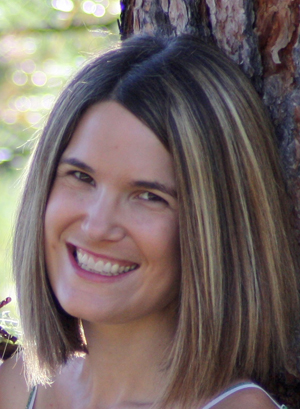
Heidi White is a classical homeschooler with two young children. She teaches Literature and History at a cooperative classical school in Colorado Springs called The Journey School. Heidi also writes fiction and is currently working on a writing project about shaping what children love through education and discipleship.
Thanks for your post! I appreciated your words on turning negativity around. I have a child who “hates” all things academic. I like the idea of “banning” words/phrases to better express oneself.
Blessings,
Melissa
Heidi, there is much wisdom in the two ideas that you presented here. And I like how you helped me picture each of them in your writing – it makes them easy to remember. I like that in the Eagle Eye approach you are incrementally and intentionally creating a positive vision of education. And in the ‘banned words’ approach you are teaching that there is a positive to be found in a negative – that fruit comes of labour and it is good to labour. Thank you.
Yes. Great post Heidi! Thank you!